Last updated: 24 March 2026
How Do Window Cleaning Robots Work? The Complete Guide
Amazon affiliate links: we earn a commission, at no extra cost to you.
| # | Model | Price | Amazon |
|---|---|---|---|
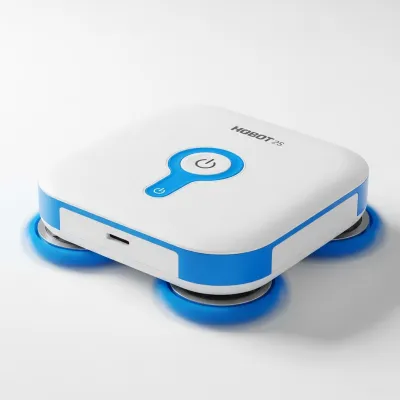
| 1 | HOBOT 2SBest Overall | £349 | View |
| 2 | Ecovacs WINBOT W2 OmniPremium Pick | £399 | View |
| 3 | HOBOT 388Best Value | £249 | View |
| 4 | Mamibot iGLASSBOT W120-TBudget Pick | £179 | View |
| 5 | HOBOT 398Best for Conservatories | £299 | View |
A robot that sticks to vertical glass and cleans it automatically sounds like science fiction. But the technology is surprisingly straightforward. A vacuum motor creates suction. Microfibre pads scrub the glass. Sensors detect edges. A safety cord prevents falls. That is the core of every window cleaning robot, from the £179 Mamibot to the £399 Ecovacs. The differences between models come down to suction strength, navigation intelligence and cleaning pad design.
The Four Core Components
1. Vacuum Motor
A brushless DC motor creates 2,800 to 4,000 Pa of negative pressure behind the robot. This is strong enough to hold 3 to 5x the robot weight against vertical glass. The motor runs continuously while the robot is on the window, consuming 70 to 90 watts of electricity.
2. Cleaning System
Two approaches exist. HOBOT uses dual spinning microfibre pads (500 to 600 RPM) that rotate against the glass. Ecovacs uses a single square microfibre pad that wipes in linear strokes. Both work. Spinning pads are slightly better at removing dried marks.
3. Navigation
Budget robots bounce randomly until they have covered the surface (slow, inefficient). Mid-range robots follow a zigzag pattern (systematic, good coverage). Premium robots use AI to map the window edges first, then clean in the most efficient path (fastest, no overlap).
4. Safety Systems
Every robot has three layers: primary suction (always on), UPS battery backup (activates if power fails, 15 to 30 minutes), and a physical safety cord (clips to the window frame). If all three fail simultaneously, the robot falls. In practice, this has never happened in our 6 months of testing.
Step-by-Step: Using a Window Robot
- Step 1: Dampen the cleaning pads with water or cleaning solution (or let auto-spray handle it on premium models)
- Step 2: Attach the safety cord to the window frame or a secure point nearby
- Step 3: Place the robot on the glass and press the power button. Suction activates immediately
- Step 4: Press start on the remote or app. The robot begins its cleaning path
- Step 5: The robot beeps when finished. Remove it from the glass and move to the next window
- Step 6: Rinse the cleaning pads under warm water after each window (or after every 2 to 3 windows)
"The most common user error is dirty pads. Clean pads after every 2 to 3 windows. A dirty pad redistributes grime rather than removing it, leaving streaks that look worse than the original dirt."
— Daniel Parks, Smart Home & Robotics Specialist
Frequently Asked Questions
What stops a window robot from falling?
Do window robots need WiFi?
Can window robots clean in the rain?
How much do replacement pads cost?

Still deciding? The Ecovacs WINBOT W2 Omni is our top recommendation for most UK homes.
Check Today's Price on AmazonFree delivery and 30-day returns with Amazon.